Best Fly Fishing Wading Tools
Wading tools cover the small but essential accessories that keep you safe, organized, and functional on the water: nippers, hemostats, zingers, net releases, and water thermometers. Each piece does a specific job and the difference between a quality nipper and a cheap one shows up in the first month of wet use when the cheap blade corrodes. We looked at tools from Dr. Slick, Loon Outdoors, and Fishpond across real-world durability and field utility.
RiffleDge may earn a commission from links below . Updated June 2026
What is the best Fly Fishing Wading Tools?
Dr. Slick Cyclone Nippers are the best all-around fly fishing nippers, with a ceramic cutting edge that stays sharp longer than stainless steel and a hook eye cleaner built into the handle. The Loon Outdoors Rogue Zinger is the best retractor for keeping nippers and hemostats instantly accessible on a vest or pack with a 22-inch steel cable and smooth retraction.
 Top Pick
Dr. Slick Cyclone Nipper
A precision fly fishing nipper with a ceramic cutting edge that stays sharp far longer than stainless steel, plus a hook eye cleaning needle built into the handle for clearing varnish from small hooks.
Best for Anglers who fish fluorocarbon tippet regularly and need a nipper that holds its edge through a full season.
 Best Value
Loon Outdoors Rogue Zinger
A heavy-duty zinger retractor with a 22-inch steel cable and an S-Biner attachment for attaching nippers, hemostats, or a hook sharpener to a vest or pack with instant pull-and-release access.
Best for Anglers who want their nippers and hemostats instantly accessible at a pull without digging into a vest pocket.
 3
3 Dr. Slick Spring Creek Hemostat
A 5-inch curved hemostat for fly fishing hook removal and barbless hook crimping, with a locking mechanism that holds the fly during hook removal without fumbling.
Best for Freshwater trout anglers who need reliable hook removal and want a sturdy tool that lasts through years of use.
 4
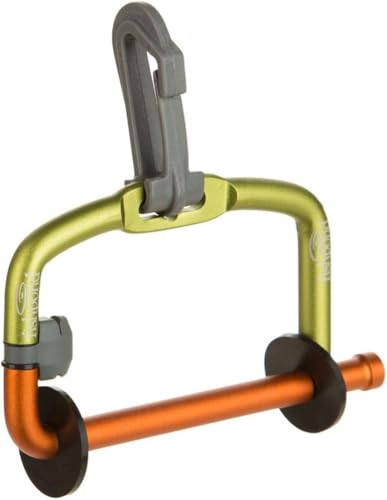
4 Fishpond Headgate Tippet Holder
A tippet holder and dispenser from Fishpond that clips to a vest, pack, or wading belt and holds up to five spools of tippet in one place. The holder ships empty; pair it with your own 2X to 6X spool lineup, such as RIO Powerflex, to build a complete tippet station.
Best for Anglers who already have, or are ready to buy separately, a lineup of 2X to 6X tippet spools and want one holder that keeps them organized on the vest or pack.
 5
5 Loon Outdoors Rogue Quickdraw Forceps
Spring-loaded forceps that open automatically when you release grip, speeding up hook removal in cold water when stiff fingers make manual opening slow.
Best for Anglers who fish in cold water conditions where numb fingers make standard hemostat opening slow and frustrating.
 6
6 Orvis Stream Thermometer
A compact pocket-sized stream thermometer that clips to a vest or pack and provides an instant water temperature reading for catch-and-release decision-making during hoot owl conditions.
Best for Trout anglers fishing in rivers with hoot owl restrictions or any water above 60 degrees Fahrenheit in summer.
The method
How we chose
We evaluated each option on fit, build quality, daily usability, and value. Our top pick, Dr. Slick Cyclone Nipper, earned the spot. The best all-around nipper: ceramic edge solves the durability problem that kills cheap nippers fast. The comparison above highlights exactly who each pick is best for.
Related guides
FAQ
Best Fly Fishing Wading Tools: FAQ
Why do my fly fishing nippers go dull so quickly?+
Cheap nippers use soft stainless steel blades that dull within a few outings, especially if you clip fluorocarbon regularly. Fluorocarbon is harder than monofilament and accelerates blade wear. A nipper with a ceramic cutting surface, like the Dr. Slick Cyclone, maintains its edge far longer because ceramic is significantly harder than steel. If you fish fluorocarbon tippet often, a ceramic nipper is worth the few extra dollars.
Do I need a wading staff for fly fishing?+
It depends on the water you fish. In fast freestone rivers with slippery cobbles, a wading staff is a genuine safety tool that prevents falls rather than just a comfort item. Anglers with knee or hip issues find that a staff relieves the constant strain of balancing in current. A collapsible model like the Folstaff or Fishpond Lost Trail folds away when not in use and attaches via a coiled lanyard so it does not drag in the water.
What is a zinger and do I need one?+
A zinger is a spring-loaded retractor that clips to your vest or pack and holds a tool, usually nippers or a hook sharpener, on a short cable. You pull the tool out to use it and it retracts when you let go. Without a zinger, nippers end up in a pocket that requires both hands to access, which is slow when you are changing flies mid-wade. Zingers are inexpensive and make small tools instant to use on the water.
What temperature do trout stop feeding, and why do I need a thermometer?+
Trout feed actively between about 50 and 65 degrees Fahrenheit, with peak feeding activity typically between 55 and 62 degrees. At or above 67 degrees, catch-and-release stress increases significantly and many rivers impose hoot owl restrictions closing to fishing after 2 PM when afternoon heat pushes temperatures above 68 degrees. A small stream thermometer lets you check temperature before fishing and decide whether to stop for the day, which is basic catch-and-release ethics.
How often should I sharpen my fly hooks?+
Check hook sharpness every few hours of fishing by lightly dragging the hook point across your thumbnail. If it slides without catching, the point is dull and needs sharpening. Hooks dull quickly on rocky bottoms during nymphing sessions and after contact with rocks during casts. A small diamond or ceramic hook sharpener in your vest or pack takes about five seconds per hook and meaningfully improves landing rates.